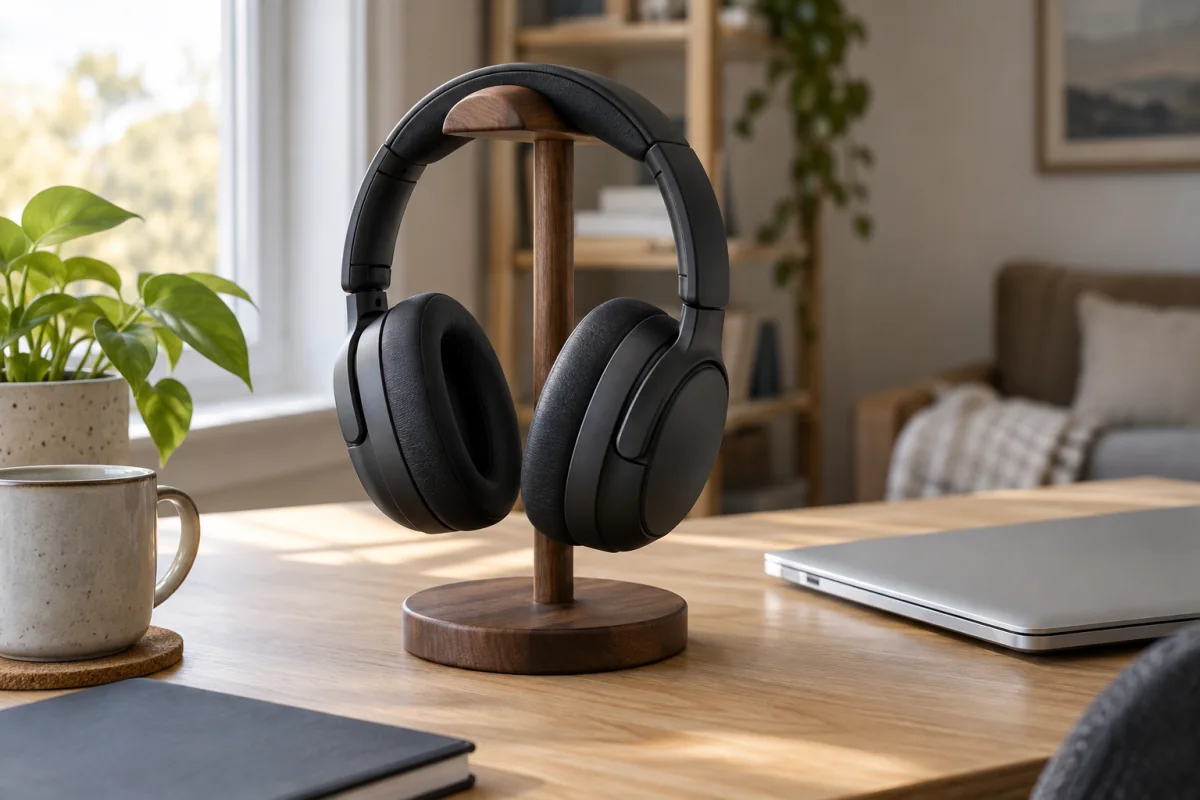
For working from home, the headphones that matter are the ones that cancel low, steady noise, sound clear on calls, and stay comfortable for a full day. Active noise cancellation (ANC) is excellent against traffic, fans and air conditioning, and much weaker against voices and sudden sounds like a barking dog. Good call microphones are a separate feature from good ANC, and many headphones that sound great for music are poor on calls. This guide explains what ANC can and cannot do, the specs to check before buying, how over-ear and earbud styles compare for a workday, and the settings that make calls sound better.
Key takeaways
- ANC removes constant low-frequency noise best. It will not silence a toddler or a neighbour’s conversation; for that you need passive isolation and a transparency-free fit.
- Over-ear headphones win on comfort for eight-hour days and on battery life. Earbuds win on portability and not messing up your hair before a video call.
- Check the microphone setup, not just the ANC. Multi-mic beamforming with wind and noise reduction is what makes you sound clear to others.
- Multipoint Bluetooth, which connects to a laptop and phone at once, saves more frustration than any other single feature.
- Prices at the time of writing range from under a hundred to several hundred, and the middle of that range is where most people should shop.
What noise cancellation can and cannot do
ANC works by picking up outside noise with microphones and playing an inverted copy of it into your ear so the two cancel. This is very effective for sounds that are steady and low-pitched: engine drone, HVAC hum, a washing machine on spin. It is far less effective on sounds that change quickly or sit in the mid and high range, which is where human speech lives. A voice in the next room will be quieter with ANC on, but you will still hear it.
Passive isolation is the physical seal. Thick over-ear cushions or well-fitted silicone tips block a lot of mid-range sound on their own. The best headphones combine both. If your main problem is voices, prioritise a snug seal and closed-back design over headline ANC numbers.
Two side effects to know about: some people feel a mild pressure sensation with strong ANC, and ANC uses battery, typically cutting run time by a quarter or more. Neither is a defect, but both influence which model suits you.
The specs that matter for a workday
Comfort and weight
Over-ear models in the 250 to 300 gram range are comfortable for most people all day. Above that, clamp force and heat become an issue. Look for replaceable earpads, because pads wear out in a year or two of daily use and a replacement pair is much cheaper than new headphones. Glasses wearers should look for softer, deeper pads that do not press the arms into the skull.
Call microphone quality
This is the spec that separates work headphones from music headphones. Look for:
- Multiple microphones (four or more) with beamforming aimed at your mouth.
- Background noise reduction on the outgoing signal, so the other side hears you and not your kitchen.
- Sidetone, which plays a little of your own voice back so you do not shout.
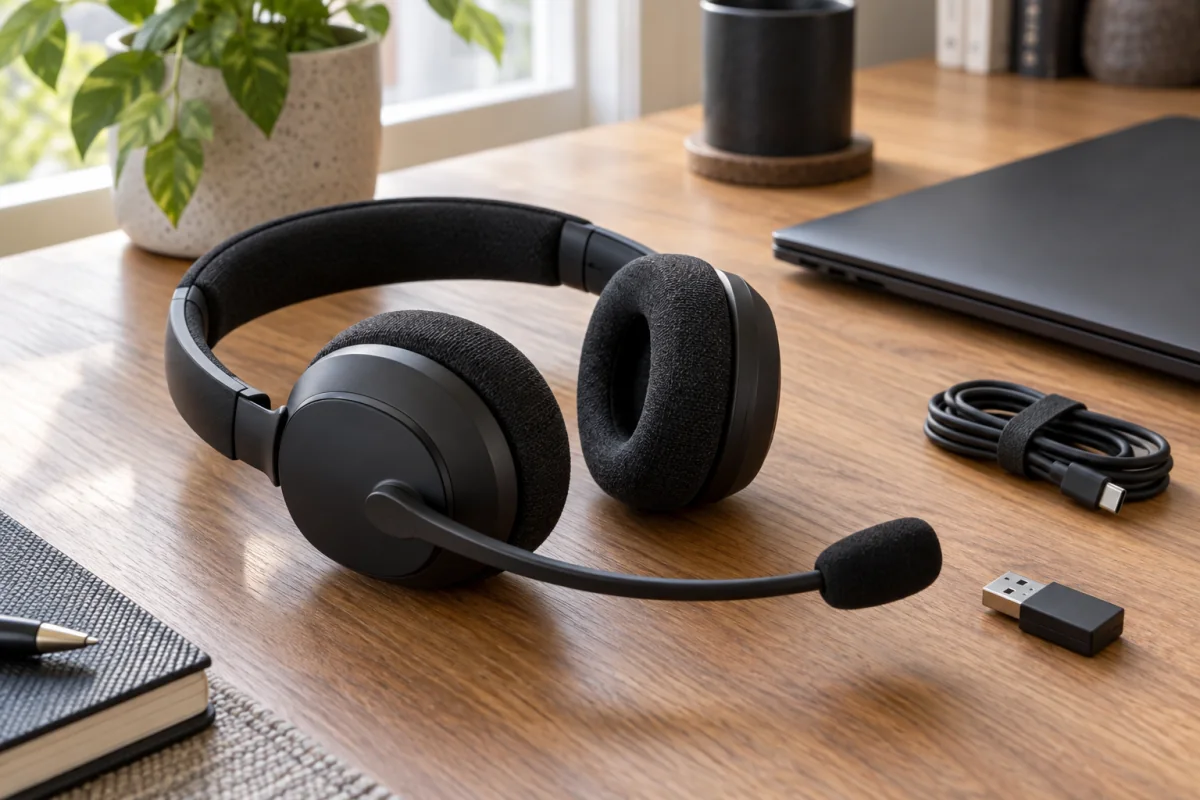
- A boom microphone if you are on calls most of the day. Office-style headsets with a boom outperform any consumer headphone on calls.
Multipoint and codecs
Multipoint lets the headphones stay paired to your laptop and phone at the same time and switch when a call comes in. Without it you will be re-pairing several times a day. Codec support (SBC, AAC, aptX, LDAC, LC3) affects music quality but matters little for calls, because most calling apps use a lower-quality profile anyway. The Bluetooth SIG explains the newer LE Audio profile, which improves call quality on supported devices, on its LE Audio page.
Battery and charging
Thirty hours with ANC on is typical for over-ear models now; earbuds manage six to eight hours per charge plus the case. A quick-charge feature that gives a few hours from ten minutes on the cable is worth having. Check whether the headphones work wired with a 3.5 mm or USB-C cable when the battery is flat.
Wear detection and controls
Auto-pause when you take them off is useful; a physical button for mute is more useful. Touch controls are easy to trigger by accident when adjusting the headband mid-call.
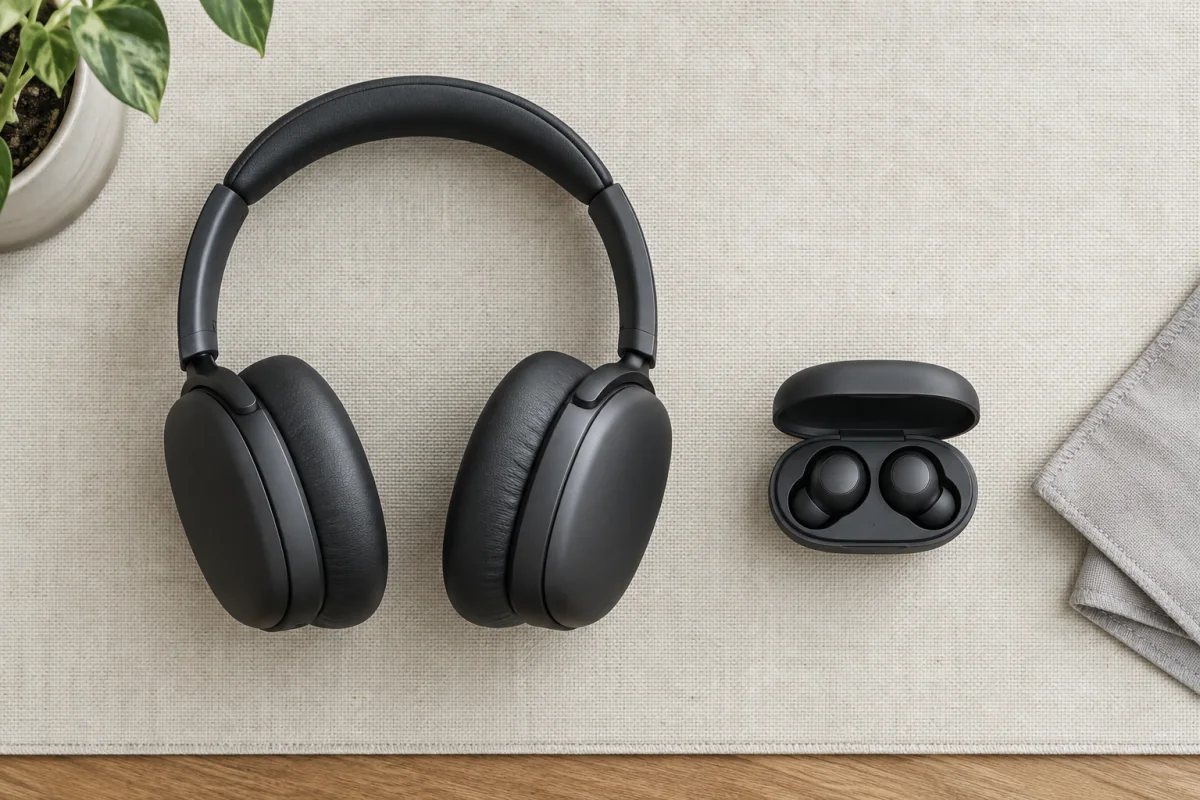
Over-ear versus earbuds for home working
| Factor | Over-ear | Earbuds |
|---|---|---|
| All-day comfort | Better, if under 300 g with good pads | Ear fatigue after 3 to 4 hours for many people |
| Noise cancellation | Stronger, more passive isolation | Good on premium models, depends on tip fit |
| Call microphones | Usually better; more room for mics | Adequate on premium models, weaker in wind |
| Battery | 25 to 40 hours | 5 to 8 hours per charge, 20 to 30 with case |
| Video-call appearance | Visible, flattens hair | Nearly invisible |
| Heat | Warm ears in summer | Cool |
Many people end up with both: over-ears at the desk, earbuds for a walk-and-talk call. If you can only buy one for desk work, over-ear is the safer choice. Our separate wireless earbuds guide goes deeper on tip fit and codecs if you lean the other way.
Representative models and what they are known for
These are not rankings. Descriptions come from each manufacturer’s published specifications; check the current product page before buying, because features change between generations.
- Sony WH-1000X series: strong ANC, long battery, multipoint, good app control. Call quality is competent rather than class-leading. Sony’s headphone product pages list battery and codec figures per model.
- Bose QuietComfort series: comfort is the reason people buy them. ANC is among the strongest, especially in the low range. Adjustable ANC levels help if you want to hear a doorbell.
- Apple AirPods Max: excellent transparency mode and call clarity in Apple ecosystems, heavy at around 385 g, and multipoint only works properly with Apple devices.
- Sennheiser Momentum series: emphasis on sound quality and long battery; ANC slightly behind Sony and Bose.
- Jabra Evolve2 and Poly Voyager (headsets): made for calls. Boom mics, mute buttons, and certification for Microsoft Teams or Zoom. Less pleasant for music, far better for eight hours of meetings.
- Budget options from Anker Soundcore and 1More: decent ANC and multipoint at a fraction of the price. Mic quality and pad durability are where the savings show.
Setting them up for better calls
- Update firmware in the maker’s app before judging call quality. Microphone processing often improves in updates.
- Pick the right Bluetooth profile on your computer. On Windows, the headphones appear twice: as a stereo output and as a hands-free device. Calls use hands-free; music uses stereo. Set your calling app’s microphone to the hands-free entry and your speakers to stereo if the app allows it.
- Turn on sidetone if the app offers it, so you can hear your own voice and stop raising it.
- Use a USB dongle if one is included. Bundled dongles from headset makers give steadier connections and better call audio than most laptops’ built-in Bluetooth.
- Set ANC to a medium level for calls. Full ANC plus a sealed ear makes your own voice sound muffled to you, which leads to speaking too loudly.
- Test with a recording. Record yourself in a voice memo app through the headphones and listen back. That tells you more than any spec sheet.
Common mistakes
- Buying on ANC strength alone when the real problem is call clarity. Ask what the other side hears.
- Ignoring pad replacement. If pads are glued or unavailable, the headphones have a shorter useful life.
- Expecting ANC to block conversation. For voices, a closed door beats any headphone.
- Skipping multipoint and then fighting with pairing every time the phone rings.
- Wearing them at high volume all day. Good ANC lets you keep volume low, which protects your hearing. The World Health Organization’s hearing loss fact sheet puts safe listening in context.
Who this is not for
If you work in a quiet room and mostly type, a comfortable pair of open-back wired headphones will sound better for less and never need charging. If you are on calls seven hours a day, skip consumer headphones and buy a proper boom-mic headset; your colleagues will thank you. If you need to hear children or a doorbell while working, look for strong transparency mode or a single earbud rather than heavy ANC. And if your video calls freeze rather than sound bad, the fix is your network, not your headphones; start with our mesh Wi-Fi guide. For the rest of the desk, the monitor setup guide covers screens and arrangement.
Frequently asked questions
Does noise cancellation block voices?
Partly. It reduces them but does not remove them, because speech sits in a frequency range where ANC is weakest. Passive isolation from a good seal does more for voices.
Are headsets with a boom mic better for calls than headphones?
Yes, consistently. A microphone a few centimetres from your mouth picks up far less room noise than mics built into the ear cups.
Why do my headphones sound bad on Windows calls?
Bluetooth switches to a lower-quality hands-free profile whenever the microphone is active. A USB dongle from the maker, or newer LE Audio support on both ends, improves this.
How long should ANC headphones last?
Three to five years is typical, with earpads replaced once or twice. Batteries lose capacity over time and are rarely user-replaceable, which is the usual end of life.
Can I wear ANC headphones all day safely?
Yes, provided volume stays moderate. Take them off for a few minutes each hour to let your ears cool and to reduce pressure on the head.