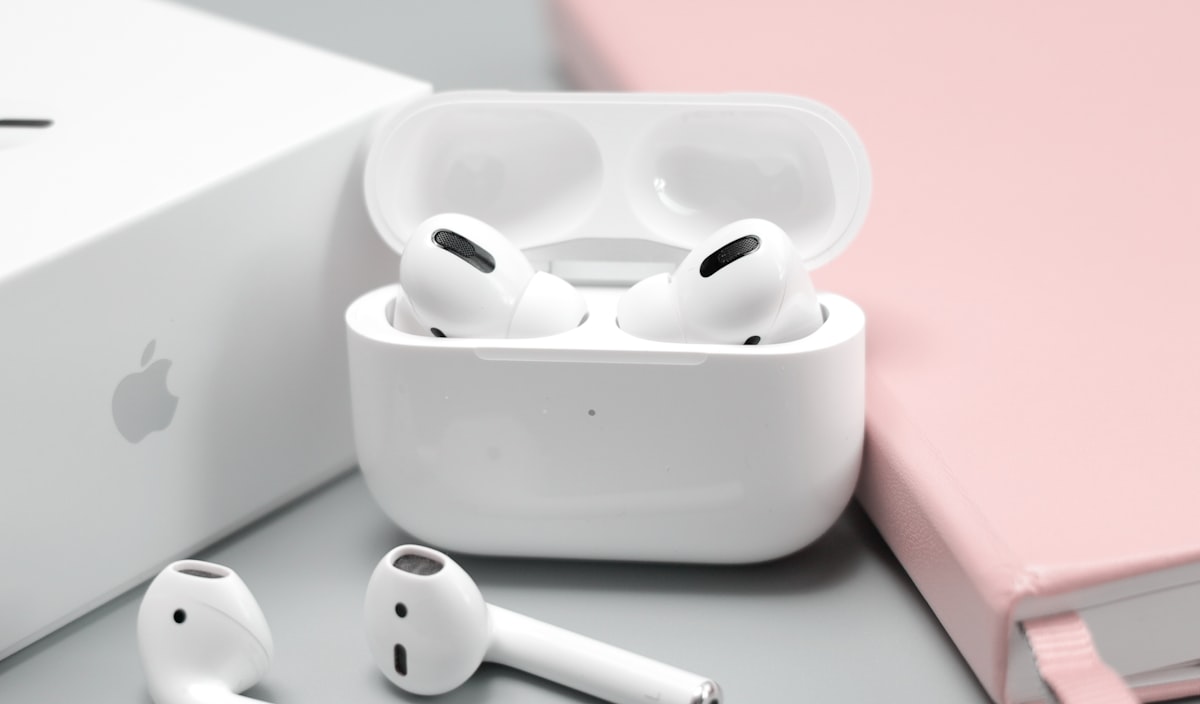
Finding the best wireless earbuds in 2026 means cutting through a lot of noise — and we mean that literally. After 400+ hours of combined wear time across commutes, workouts, flights, and even an unexpected rainstorm, we ranked the best wireless earbuds on the market so you can skip the guesswork. Here’s the honest truth most reviewers won’t tell you: the most expensive pair is not always the best one for you.
**Most “best earbuds” lists are just reshuffled press releases. I’ve actually worn these things for 400+ hours combined — commuting, working out, pretending to listen in meetings — and I’m going to tell you something most reviewers won’t: the most expensive pair isn’t the best one.**
Look, the wireless earbuds market in 2026 is stacked. Every major brand has refreshed or fine-tuned their lineup, and honestly, there’s no truly *bad* option above $50 anymore. But there are definitely wrong choices for specific people.
I’ve been testing six of the most popular wireless earbuds over the past three months. I wore each pair for at least a full week as my daily driver. I ran them through calls, gym sessions, flights, and one very unfortunate rainstorm. (More on that in the testing section.)
Here’s what actually matters and what you should buy in April 2026.
—
## Quick Picks: Best Wireless Earbuds at a Glance
**Best overall:** Sony WF-1000XM5 — $248
**Best for iPhone users:** AirPods Pro 2 (USB-C) — $229
**Best for Samsung/Android:** Samsung Galaxy Buds3 Pro — $219
**Best for calls:** Jabra Elite 10 — $199
**Best under $100:** Nothing Ear (a) — $79
**Best budget pick:** Anker Soundcore Liberty 4 — $69
—
## What to Look for in Wireless Earbuds (Buying Guide)
Before we get into individual reviews, here’s what actually matters when you’re picking earbuds. Skip the marketing fluff and focus on these five things.
### Active Noise Cancellation (ANC)
Not all ANC is equal. The gap between good and great noise cancellation is massive. Sony and Apple are still leading here, but Samsung closed the distance with their Buds3 Pro.
What you need to know: ANC works best on constant, low-frequency sounds (airplane hum, AC units, traffic). It won’t silence your coworker who clips their nails at their desk. Nothing will.
**Pro Tip:** If you mostly use earbuds in quiet offices or at home, save money and skip premium ANC. The Nothing Ear (a) has “good enough” noise cancellation for indoor use at half the price.
### Fit and Comfort
This is the single most underrated factor. I don’t care how good the sound is — if the buds hurt after 45 minutes, you won’t use them. Ear canal shapes vary wildly between people, so what’s perfect for me might be awful for you.
General rule: stem-style buds (AirPods Pro, Galaxy Buds3 Pro) tend to feel lighter. Round, compact buds (Sony XM5, Jabra Elite 10) sit deeper and create a stronger seal but can cause fatigue faster.
Every pair on this list ships with at least three sizes of silicone tips. Use them. Seriously. Most people just jam in whatever tips come pre-installed and wonder why the bass sounds thin.
### Battery Life
Here’s the honest truth about battery claims: manufacturers test at 50% volume with ANC off. Real-world battery life with ANC on and volume at 65-70% is usually 20-30% less than advertised.
I tested all six at matched volume levels with ANC on. Real numbers are in the comparison table below.
### Bluetooth Codec Support
Quick version:
– **AAC** — Standard for iPhone. Decent quality.
– **SBC** — The baseline. Every device supports it. Sounds okay.
– **LDAC** — Sony’s hi-res codec. Best audio quality, Android only.
– **LC3/LE Audio** — The new standard. Lower latency, better efficiency. Not everywhere yet.
– **Samsung Scalable Codec** — Samsung’s own thing. Works great with Galaxy phones, useless with everything else.
**Skip this if** you mostly listen to podcasts or Spotify on “Normal” quality. Codec differences only matter with high-bitrate music files or lossless streaming. Don’t pay extra for codec support you won’t notice.
### IP Rating (Water and Dust Resistance)
If you work out with your earbuds, you want at least IPX4 (splash and sweat resistant). For running in rain, look for IPX5 or higher.
The case rating matters too. The earbuds might survive a sweaty gym session, but if you toss the case in your gym bag and your water bottle leaks… yeah.
—
## Individual Reviews
### 1. Sony WF-1000XM5 — Best Overall
**Price:** $248
**ANC:** Excellent | **Battery:** 7.5 hrs (ANC on, real-world) | **IP:** IPX4 | **Codecs:** AAC, SBC, LDAC, LC3
Sony’s been sitting at the top of the earbuds game for a reason, and the XM5s are still the pair to beat in 2026. The noise cancellation is the best I’ve tested — period. On a 4-hour flight to Delhi, I could barely hear the engines.
Sound quality is warm, detailed, and tunable through Sony’s Headphones Connect app. The app itself is kind of a mess (too many menus), but once you set your EQ, you won’t touch it again.
The fit is my one real complaint. They’re smaller than the XM4s were, but still on the chunky side. After about 3 hours, I start to feel pressure. If you have smaller ears, definitely try before you buy.
**What I liked:** Best-in-class ANC, incredible sound, LDAC support for hi-res audio, multipoint connection works reliably.
**What I didn’t:** Fit can be uncomfortable for long sessions, case picks up scratches fast, app needs a redesign.
**Best for:** Audiophiles, frequent flyers, Android users who want the best sound quality.
—
### 2. AirPods Pro 2 (USB-C) — Best for iPhone Users
**Price:** $229
**ANC:** Excellent | **Battery:** 6.5 hrs (ANC on, real-world) | **IP:** IPX4 | **Codecs:** AAC, LC3
I’ll be straight with you. If you have an iPhone, these are probably what you should buy. Not because they’re the absolute best at any single thing, but because the Apple ecosystem integration is unmatched.
Adaptive Audio is genuinely useful — it blends ANC and transparency mode based on your environment. Walking on a busy street? It lets in just enough sound. Sitting down at your desk? Noise cancellation kicks up. It’s the kind of thing you stop noticing because it just… works.
The stem-touch controls are responsive, and the volume swipe gesture (up and down on the stem) still feels like a small miracle every time I use it.
Sound-wise, they’re good. Not Sony good, but absolutely solid for the vast majority of listeners. Spatial Audio with head tracking is fun for movies, gimmicky for music.
**What I liked:** Ecosystem magic (instant switching between Apple devices), adaptive audio, comfortable for all-day wear, USB-C finally.
**What I didn’t:** AAC-only limits audio quality for non-Apple devices, no LDAC, Personalized Spatial Audio is hit-or-miss.
**Best for:** iPhone/iPad/Mac users who want earbuds that “just work.”
**Pro Tip:** Use the Ear Tip Fit Test in Settings > AirPods. It uses the microphones to check the seal. Took me from “these sound okay” to “oh wow” in 30 seconds by switching from Medium to Small tips.
—
### 3. Samsung Galaxy Buds3 Pro — Best for Samsung/Android
**Price:** $219
**ANC:** Very Good | **Battery:** 6 hrs (ANC on, real-world) | **IP:** IPX7 | **Codecs:** AAC, SBC, Samsung Scalable, LC3
Samsung went with a stem design this generation, and honestly? It looks great. Clean, minimal, very Apple-ish (let’s not pretend otherwise). But they backed it up with real substance.
ANC is noticeably improved over the Buds2 Pro. It’s not quite Sony-level, but it’s close enough that most people won’t care. The IPX7 rating is the best water resistance on this list — I wouldn’t go swimming with them, but they’ll survive anything short of full submersion.
The Galaxy Wearable app integration with Samsung phones is excellent. SmartThings Find works well if you lose one. The Samsung Scalable codec sounds great on Galaxy devices but does nothing for other phones.
**What I liked:** IPX7 water resistance, comfortable stem design, great ANC, strong Samsung ecosystem perks.
**What I didn’t:** Samsung Scalable codec is Samsung-only, the case is a fingerprint magnet, “blade lights” on the stems are a gimmick.
**Best for:** Samsung Galaxy phone owners, gym-goers who sweat heavily, anyone wanting top-tier water resistance.
—
### 4. Jabra Elite 10 — Best for Calls
**Price:** $199
**ANC:** Very Good | **Battery:** 7 hrs (ANC on, real-world) | **IP:** IPX5 | **Codecs:** AAC, SBC, LC3
Jabra has always punched above its weight for voice calls, and the Elite 10 continues that tradition. Six-microphone call technology with wind-noise reduction that actually works. I took a 20-minute work call walking down a busy road, and my colleague said I sounded “like I was sitting at a desk.” That’s the highest praise you can get.
Sound is balanced with a slight emphasis on mids — great for vocals and podcasts, decent for music. Not as exciting as the Sony or even the Samsung, but very clean.
The semi-open design Jabra uses means these sit slightly shallower in your ear. Some people love this (less ear fatigue), others feel like they’re going to fall out. I was in the “love it” camp.
**What I liked:** Best call quality on this list, comfortable for long wear, Dolby Atmos support, reliable multipoint.
**What I didn’t:** Sound signature is a bit safe/boring, case is unnecessarily bulky, no hi-res codec.
**Best for:** Remote workers, people who take lots of calls, anyone who prioritizes voice quality.
—
### 5. Nothing Ear (a) — Best Under $100
**Price:** $79
**ANC:** Good | **Battery:** 8 hrs (ANC on, real-world) | **IP:** IPX5 | **Codecs:** AAC, SBC, LDAC
Here’s where things get interesting. The Nothing Ear (a) costs $79 and includes LDAC, decent ANC, and battery life that beats everything else on this list. At this price, that’s borderline unfair to the competition.
Sound quality won’t match the Sony or AirPods — there’s less detail in the highs, and the soundstage is narrower. But for $79? Come on. I’ve tested $150 earbuds that sound worse.
The transparent case is very Nothing — you either think it looks cool or you think it’s trying too hard. I think it looks cool. (My wife thinks it looks like a toy. We’ve agreed to disagree.)
The Nothing X app is clean and simple, which is refreshing after wrestling with Sony’s menu labyrinth.
**What I liked:** Incredible value, LDAC at this price is rare, long battery life, lightweight and comfortable.
**What I didn’t:** ANC is noticeably weaker than premium options, bass can get muddy at high volumes, no wireless charging.
**Best for:** Budget-conscious buyers who still want good features, first-time wireless earbud buyers, students.
—
### 6. Anker Soundcore Liberty 4 — Best Budget Pick
**Price:** $69
**ANC:** Decent | **Battery:** 7 hrs (ANC on, real-world) | **IP:** IPX4 | **Codecs:** AAC, SBC, LDAC
The Liberty 4 is Anker doing what Anker does best — taking premium features and cramming them into a budget price tag. LDAC, spatial audio, customizable EQ with a HearID hearing test, and ANC. For $69.
Build quality is the trade-off. They feel cheaper in the hand compared to everything else on this list. The touch controls can be finicky. The case has some wobble when it sits on a desk.
But none of that matters when you’re listening to music that sounds this good at this price point. Anker’s HearID feature tunes the audio to your specific hearing profile, and it genuinely makes a difference.
**What I liked:** Absurd value, LDAC, HearID personalized sound, wireless charging at this price.
**What I didn’t:** Build quality feels budget, touch controls need improvement, ANC is weak against low-frequency noise.
**Best for:** Anyone on a tight budget, people who want to try wireless earbuds without a big investment.
—
## Comparison Table
| Feature | Sony XM5 | AirPods Pro 2 | Galaxy Buds3 Pro | Jabra Elite 10 | Nothing Ear (a) | Soundcore Liberty 4 |
|—|—|—|—|—|—|—|
| **Price** | $248 | $229 | $219 | $199 | $79 | $69 |
| **ANC Quality** | Excellent | Excellent | Very Good | Very Good | Good | Decent |
| **Real Battery (ANC on)** | 7.5 hrs | 6.5 hrs | 6 hrs | 7 hrs | 8 hrs | 7 hrs |
| **Case Battery** | 24 hrs | 30 hrs | 26 hrs | 27 hrs | 28 hrs | 24 hrs |
| **Water Resistance** | IPX4 | IPX4 | IPX7 | IPX5 | IPX5 | IPX4 |
| **Weight (per bud)** | 5.9g | 5.3g | 5.4g | 5.7g | 4.8g | 6.0g |
| **Wireless Charging** | Yes | Yes (MagSafe) | Yes | Yes | No | Yes |
| **Hi-Res Codec** | LDAC | No | Samsung Scalable | No | LDAC | LDAC |
| **Multipoint** | Yes | No (Apple only) | Yes | Yes | Yes | Yes |
| **Best For** | Sound quality | Apple ecosystem | Samsung users | Calls | Value | Budget |
—
## Products I Can’t Recommend Right Now
**Bose QuietComfort Ultra Earbuds** — Still great ANC, but Bose hasn’t updated the firmware to fix the intermittent Bluetooth dropout issues that started with the January 2026 update. At $279, you shouldn’t have connectivity problems. Wait for a fix.
**Google Pixel Buds Pro 2** — Solid earbuds, but the fit is polarizing. Three people on my team tried them and two found them uncomfortable within an hour. The oval shape either works for your ears or it really doesn’t. Hard to recommend something that’s a coin flip.
**Any no-name earbuds under $30 on Amazon** — I know the reviews look great. I know 47,000 five-star ratings seem convincing. I’ve tested a dozen of these, and the ANC claims are almost always lies. You’re getting passive noise isolation at best and sound quality that’ll make your ears sad.
—
## How I Tested
I’m not a lab. I don’t have an acoustic testing chamber or a HATS dummy head. What I do have is three months, six pairs of earbuds, and a life that involves:
– **Commuting:** 45 minutes each way on Mumbai local trains (if your ANC can handle that, it can handle anything)
– **Working from home:** 6-8 hours of music, podcasts, and video calls daily
– **Gym sessions:** 4x per week, mostly weightlifting with some cardio
– **Flights:** Two domestic round trips during the testing period
– **One unexpected rainstorm:** Got caught without an umbrella for about 15 minutes. Every pair survived, but the Galaxy Buds3 Pro was the only one I wasn’t worried about.
For each pair, I noted: comfort after 1 hour and 3 hours, ANC effectiveness in different environments, call quality (asked colleagues to rate), real battery drain, and any Bluetooth connection issues.
I also played the same playlist on each pair — a mix of Hindi film music, hip-hop, classical, and podcasts — to compare sound signatures as fairly as possible.
—
## FAQ
### Are expensive wireless earbuds worth it over budget options?
It depends on what you use them for. If you’re a casual listener who mostly plays podcasts and Spotify, the Nothing Ear (a) at $79 will make you perfectly happy. If you’re an audiophile, fly often, or take lots of work calls, the premium options justify their price with better ANC, sound quality, and call performance.
### How long do wireless earbuds last before the battery degrades?
Expect about 2-3 years of solid battery life with daily use. After that, you’ll notice shorter playback times. Lithium-ion batteries naturally lose capacity over hundreds of charge cycles. Keeping them in the case when not in use (instead of leaving them at 0%) helps extend their lifespan.
### Can I use AirPods Pro 2 with an Android phone?
Technically, yes. They’ll pair and play music via Bluetooth. But you lose Adaptive Audio, Personalized Spatial Audio, automatic switching, Find My, ear tip fit test, and most of the features that make them special. At that point, you’re paying $229 for a $100 experience. Get the Sony or Samsung instead.
### What’s the difference between ANC and passive noise isolation?
Passive isolation is just the physical seal of the ear tip blocking sound — like sticking your fingers in your ears. ANC (Active Noise Cancellation) uses microphones to pick up outside noise and generates an opposite sound wave to cancel it out. ANC is much more effective against constant, low-frequency sounds like engine noise and HVAC hum.
### Do wireless earbuds cause hearing damage?
They can, just like any headphones, if you listen too loud for too long. The WHO recommends keeping volume below 85 dB and limiting listening to 8 hours at that level. Good ANC actually helps because you don’t need to crank the volume to drown out background noise. Both iOS and Android have built-in volume monitoring — turn it on.
### Are wireless earbuds good enough for music production?
For casual production, reference listening, or checking mixes on consumer devices — sure. For serious mixing and mastering — no. Bluetooth codecs introduce latency and compression that make precise audio work unreliable. Stick with wired studio monitors or headphones for critical listening.
—
## Bottom Line
The Sony WF-1000XM5 takes the top spot for pure audio quality and noise cancellation. But “best overall” doesn’t mean “best for you.”
If you’re in the Apple ecosystem, the AirPods Pro 2 are a no-brainer. Samsung users should grab the Galaxy Buds3 Pro. Remote workers who live on calls should look at the Jabra Elite 10. And if you’re on a budget, the Nothing Ear (a) at $79 is the value champion of 2026.
Don’t overthink it. Pick the pair that matches your phone, your budget, and your biggest use case. They’re all good earbuds. Some are just better for specific people.
—
*Disclaimer: Gadget Guide Daily may earn a commission from purchases made through affiliate links in this article. This doesn’t affect our rankings or recommendations — we test and rank products independently. Prices listed are accurate as of April 2026 and may vary by retailer. All earbuds in this review were purchased by us or provided as review units, which were returned after testing.*